TPR · Sole Systems
TPR soles at fashion-programme speed.
Thermoplastic rubber injection-moulds fast, reproduces colour cleanly and regrinds its own sprues: the practical choice for seasonal styles and volume orders.
What it is
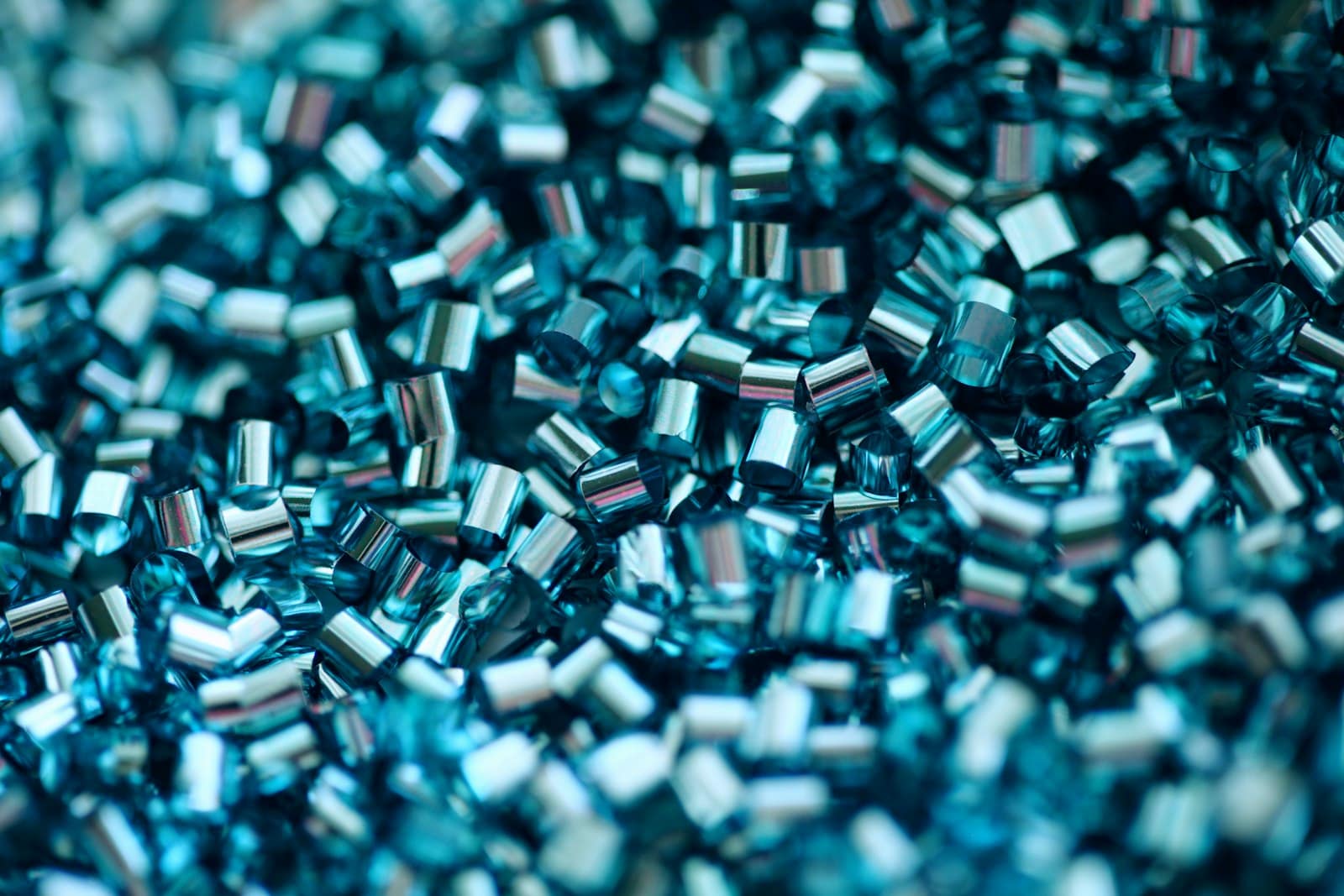
TPR behaves like rubber on the foot and like a thermoplastic on the machine. Pellets melt, inject and cool in a fraction of a rubber cure cycle, so tooling turns around quickly and unit cost falls as volume rises.
Colour is the other reason buyers choose it: masterbatch dispersion is even and repeatable across a run, which is why seasonal colour programmes land on TPR. Its known limit is low-temperature flexibility, so tell us the market and we compound accordingly.
Specification envelope
Where a row is marked held in production it is our own window, measured on the compounds we run. The rest describes the family. Values for your specific compound and construction come with the full spec sheet; request it below.
| Hardness | Held in production: 60–65 Shore A |
|---|---|
| Density | Held in production: 1.00 g/cm³ |
| Abrasion | DIN/ISO 40–160 mm³ by compound |
| Colour | Clean, repeatable Pantone matching; two-shot colour effects possible |
| Process | Injection moulded; sprue regrind reduces waste |
Tested against
The standards buyers most often write into the specification for this family. In-house rigs run on site; items marked external are booked with an accredited laboratory. Full rig-to-standard mapping is on the quality page.
Where this sole is specified
| Segment | What drives the spec | Tests that gate it |
|---|---|---|
| Casual & Lifestyle | Weight, colour fidelity and unit cost at seasonal volumes | Colour hold · shrinkage & yellowing · abrasion |
| School & Children's | Light, latex-free, softer compounds for younger age groups | Hardness SATRA TM205 · chemical compliance (REACH SVHC, Prop 65) |
Hardness and density
These are windows Hongsole holds in production, not the range the material category can reach. Rubber and TPR are quoted in Shore A, EVA in Shore C. A spec sheet that mixes the two scales is worth a second look. Why the two do not convert.
| Application | Hardness | Density |
|---|---|---|
| TPR outsole | 60–65 Shore A | 1.00 g/cm³ |
Aluminium injection tooling, cut per size. Cycles are short and the sprue regrinds back into the process, so TPR is the family where tooling amortises fastest across a seasonal run, which is why volume fashion programmes tend to land here rather than on rubber.
How this sole fails, and what sees it coming
Every construction has characteristic failures. A supplier who names them is more use than one who implies there are none, and each of these is caught by a rig on the quality page rather than by an apology afterwards. Acceptance limits are yours to set; what follows is what to look for and when it is cheapest to look.
The failure that defines this family. A TPR sole that flexes correctly in a warm showroom can go board-stiff and crack in winter service, and no room-temperature test will show it. Cold conditioning in the chamber, then re-flexing, is the test to write into the specification for any autumn or winter programme.
On smooth wet floors TPR generally reads lower on coefficient of friction than a comparable rubber compound. Because SATRA TM144 measures the whole shoe, tread geometry is the lever available here: it is worth testing the pattern early rather than discovering the gap once the tooling is cut.
Running sprue back into the process is what makes TPR economic, and it is also what puts a ceiling on pale and precise colours. A pastel or brand-matched sole needs the regrind ratio agreed as part of the specification rather than left to the shop floor.
When to specify something else
Our own figures, not a category benchmark. Held across the six sole systems; a programme that moves them says so in the quotation. Full terms, tooling cost and mould ownership are on the OEM & ODM page.
The other five systems
Compression-moulded rubber outsoles built for abrasion resistance and grip. Custom tread geometry from your drawing or sample.
Foamed rubber that keeps the wear characteristics of solid rubber while cutting unit weight for all-day comfort.
Rubber outsole bonded to an EVA midsole: abrasion where the ground is, cushioning where the foot is. Two densities, one part.
The combination sole moulded as a single unit. No bond line to delaminate, fewer assembly steps downstream.
Injection-moulded phylon for tight dimensional tolerance and repeatable output at volume. Dedicated IP tooling in-house.
Weighing one material against another? EVA, rubber and TPR compared runs the properties side by side.
Questions buyers ask about this
Why does TPR cost less than rubber at the same volume?
Two reasons. The cycle is a fraction of a rubber cure, so more pairs come off the same machine hours, and the sprue regrinds straight back into the process instead of becoming waste. Tooling is aluminium rather than steel, which lowers the entry cost as well.
What happens to a TPR sole in cold weather?
It stiffens, and loses some grip and flexibility as it does. This is the known limit of the material rather than a compounding fault. If the shoe ships to a cold-winter market, tell us at enquiry, and we compound accordingly, and for some briefs the honest answer is vulcanised rubber instead.
How closely can you match a Pantone reference in TPR?
Closely, and repeatably: masterbatch dispersion in TPR is even across a run, which is exactly why seasonal colour programmes land on this material. Send a Pantone number or a physical chip. Two-shot colour effects are possible within a single moulding.

Need the tpr soles spec sheet?
Send the drawing, the sample or just the shoe it has to survive. We come back with compound, hardness range, MOQ and timing for your programme.